Imagine a world where the structures around us, from homes to office buildings, are not only marvels of modern architecture but also champions of environmental sustainability. 🌍 A world where construction contributes not to pollution but to the planet’s health. This isn’t a distant dream; it’s an emerging reality powered by the innovative capabilities of 3D printing in eco-friendly construction.
The construction industry has long been a double-edged sword. On one hand, it fuels economies and provides necessary infrastructure. On the other, it accounts for a significant portion of global carbon emissions and environmental degradation. The need for a sustainable revolution in construction has never been more urgent, and 3D printing is at the forefront of this transformation.
As we delve deeper into the potential of 3D printing, we uncover a technology that’s not just transforming how we build, but also what we build with. By utilizing sustainable materials and reducing waste, 3D printing is set to redefine the construction landscape. This technology allows for precision and customization previously unattainable with traditional methods, offering a beacon of hope for eco-conscious architects and builders.
In this extensive exploration of 3D printing in eco-friendly construction, we will navigate through several key areas:
The Environmental Impact of Traditional Construction
To appreciate the significance of 3D printing, we must first understand the environmental challenges posed by traditional construction. We’ll explore the staggering amounts of waste generated, the carbon footprint of conventional methods, and the depletion of natural resources. These insights will lay the groundwork for appreciating how revolutionary a shift to 3D printing can be.
3D Printing: A Game Changer
Next, we will dive into the world of 3D printing, highlighting its potential to disrupt and enhance the construction industry. From its humble beginnings in creating small prototypes to its current capabilities of constructing entire buildings, we’ll trace the evolution of this technology. Key innovations such as reduced material usage, speed of construction, and potential for customization will be dissected, showcasing why 3D printing is a game changer.
Eco-Friendly Materials in 3D Printing
A critical component of sustainable construction is the materials used. Here, we’ll examine the eco-friendly materials compatible with 3D printing, such as recycled plastics, biodegradable composites, and even raw earth. These materials not only lessen the environmental impact but often enhance the durability and insulation of buildings.
Case Studies: Success Stories Around the Globe
The theory is fascinating, but real-world applications truly capture the imagination. 🌟 We’ll spotlight inspiring case studies from around the world, where 3D printing has already begun to reshape communities. From affordable housing projects in developing countries to innovative urban planning in bustling metropolises, these stories demonstrate the practical and profound impact of this technology.
Challenges and Future Prospects
No exploration would be complete without addressing the challenges and limitations that 3D printing faces in construction. We’ll candidly discuss issues such as technological barriers, regulatory hurdles, and economic considerations. Yet, despite these challenges, the future prospects remain promising. We’ll speculate on upcoming trends and advancements that could further cement 3D printing’s role in sustainable construction.
Finally, as we wrap up this journey, you’ll gain a comprehensive understanding of how 3D printing is not just a tool for building structures but a pivotal component in building a greener future. By harnessing this technology, we can look forward to a construction industry that’s as innovative as it is sustainable, paving the way for a healthier planet for generations to come. 🏗️🌿
# Building a Greener Future: Harnessing the Power of 3D Printing in Eco-Friendly Construction
In recent years, the construction industry has witnessed a technological revolution with the advent of 3D printing, also known as additive manufacturing. This cutting-edge technology has the potential to redefine the way we build, offering significant benefits in terms of sustainability and efficiency. As the global demand for environmentally friendly construction methods continues to rise, the integration of 3D printing into the construction sector is poised to play a pivotal role in creating a more sustainable future.
## How 3D Printing is Transforming the Construction Landscape
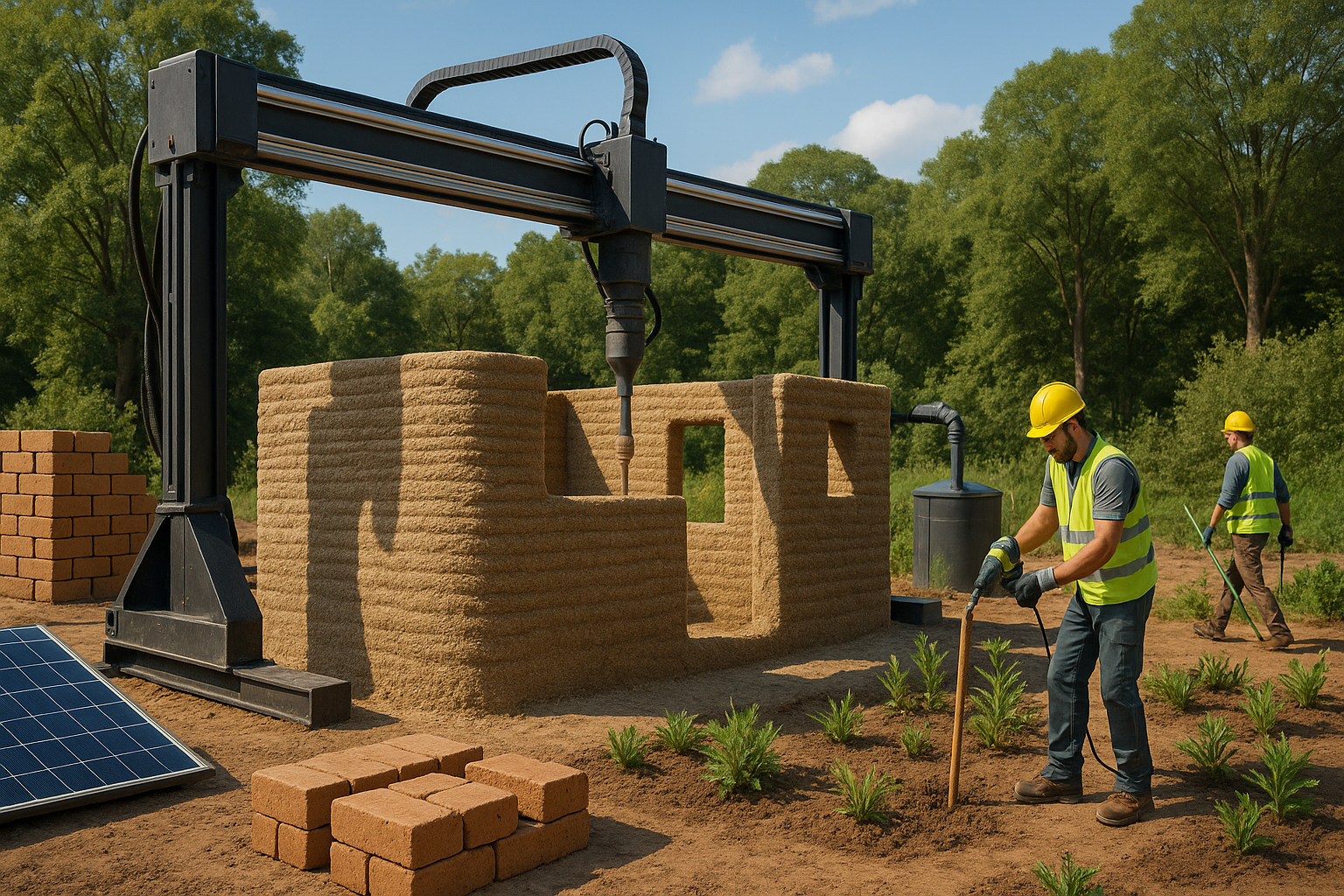
3D printing in construction involves the use of specialized machines to create building components or entire structures layer by layer, directly from digital models. This process allows for greater design flexibility, reduced waste, and improved energy efficiency compared to traditional construction methods.
### The Mechanics of 3D Printing in Construction
At the core of 3D printing technology is the ability to create complex geometries with a high degree of precision. Unlike conventional construction techniques, which often involve cutting and assembling materials, 3D printing adds material only where needed. This method significantly reduces material waste and can lower costs. The process typically involves:
– **Design**: A digital model of the structure is created using computer-aided design (CAD) software. This model serves as a blueprint for the 3D printer.
– **Printing**: The 3D printer follows the digital model, extruding materials layer by layer to build the structure. Materials commonly used include concrete, plastics, and other composites.
– **Finishing**: Once printing is complete, any necessary finishing work, such as adding windows or electrical systems, is carried out.
#### Advantages of 3D Printing in Construction
The benefits of 3D printing in construction are numerous and varied. Among the most significant are:
– **Reduced Waste**: By adding material only where it is needed, 3D printing minimizes waste. This is particularly important in an industry where up to 30% of materials can be wasted during traditional construction.
– **Design Flexibility**: The technology allows architects to create complex and organic shapes that would be difficult or impossible to achieve with traditional methods.
– **Speed and Efficiency**: 3D printing can significantly reduce construction times. A house that might take months to build using conventional methods can be printed in just a few days.
– **Sustainability**: Using recycled materials and reducing waste makes 3D printing a more sustainable option.
### The Environmental Impact of 3D Printing in Construction
The environmental benefits of 3D printing are substantial. By adopting this technology, the construction industry can drastically reduce its carbon footprint. The environmental impacts include:
– **Reduction in Carbon Emissions**: Traditional construction is a major source of CO2 emissions. 3D printing can lower these emissions by using less material and reducing transportation needs.
– **Use of Recycled Materials**: Many 3D printing processes can incorporate recycled materials, further enhancing the sustainability of the construction process.
– **Energy Efficiency**: The precision of 3D printing reduces the need for energy-intensive modifications and corrections during construction.
| Traditional Construction | 3D Printing in Construction |
|---|---|
| Significant material waste | Minimal material waste |
| Higher carbon emissions | Reduced carbon emissions |
| Long construction times | Shorter construction times |
| Limited design flexibility | High design flexibility |
🎥 **Watch this video on sustainable 3D printing practices in construction: [3D Printing in Sustainable Architecture – Engineering Explained](https://www.youtube.com/watch?v=Q6sJXlq3crg)**
## Challenges and Innovations in Eco-Friendly 3D Printing
While 3D printing offers numerous advantages, there are also challenges that need to be addressed to fully realize its potential in eco-friendly construction.
### Overcoming Material Limitations
One of the primary challenges in 3D printing construction is the development of suitable materials that are both sustainable and durable. Traditional materials like concrete have limitations, including high energy consumption and CO2 emissions during production. Innovations in material science are crucial to overcoming these limitations.
– **Biodegradable Materials**: Researchers are exploring the use of biodegradable materials that can decompose after a building’s lifecycle, reducing long-term environmental impact.
– **Recycled Composites**: Incorporating recycled plastics and other materials into the printing process can enhance sustainability. This approach not only reduces waste but also provides a use for materials that might otherwise end up in landfills.
### Technological Advancements
The technology behind 3D printing is continuously evolving. Innovations are focused on improving the precision, speed, and capabilities of 3D printers.
– **Robotics and Automation**: The integration of robotics with 3D printing can enhance precision and efficiency, allowing for more complex structures to be printed with minimal human intervention.
– **Multi-Material Printing**: Advances in printer technology are enabling the use of multiple materials in a single print, offering greater design flexibility and the ability to incorporate functional elements directly into the structure.
### Regulatory and Economic Considerations
The adoption of 3D printing in construction also faces regulatory and economic hurdles. Ensuring that printed structures meet building codes and safety standards is crucial for widespread acceptance.
– **Building Codes and Standards**: Developing standards specific to 3D printed structures is essential to ensure safety and reliability.
– **Cost Considerations**: While the initial cost of 3D printing technology can be high, long-term savings from reduced material usage and faster construction times can offset these costs.
## Real-World Applications and Future Prospects
The potential applications of 3D printing in eco-friendly construction are vast and varied, ranging from residential homes to large-scale infrastructure projects.
### Residential and Commercial Buildings
3D printing is already being used to construct homes and commercial buildings. These structures are often built faster and more affordably than traditional buildings, making them an attractive option for affordable housing initiatives.
– **Affordable Housing**: The ability to quickly and cheaply construct homes makes 3D printing a promising solution for addressing housing shortages in developing countries.
– **Customization and Design**: 3D printing allows for highly customized designs, enabling homeowners and businesses to create unique spaces tailored to their needs.
### Infrastructure and Public Works
Beyond residential and commercial applications, 3D printing is also being explored for infrastructure projects such as bridges and public buildings.
– **Bridge Construction**: 3D printed bridges have been successfully constructed, demonstrating the potential of the technology for infrastructure projects. These bridges are often lighter and require less material than traditional bridges.
– **Disaster Relief**: The speed and efficiency of 3D printing make it an ideal solution for constructing temporary shelters and infrastructure in disaster-stricken areas.
### Future Prospects
The future of 3D printing in eco-friendly construction looks promising, with ongoing research and development poised to unlock new possibilities.
– **Sustainability Innovations**: Continued advancements in material science and printing technology will likely lead to even more sustainable construction methods.
– **Global Adoption**: As costs decrease and technology becomes more accessible, the adoption of 3D printing in construction is expected to grow worldwide.
In conclusion, 3D printing holds the potential to revolutionize the construction industry by offering sustainable, efficient, and cost-effective building solutions. As technology continues to evolve, the possibilities for eco-friendly construction are boundless. By embracing these innovations, we can pave the way for a greener, more sustainable future.
—
By engaging with this evolving technology, you can be a part of the movement towards a more sustainable future. Stay informed and consider how 3D printing could impact your next construction project. For more insights, be sure to watch the video linked above! 📽️
Conclusion
Concluir um artigo extenso e informativo sobre a temática “Construindo um Futuro Mais Verde: Aproveitando o Poder da Impressão 3D na Construção Sustentável” nos oferece uma oportunidade única de refletir sobre a profunda interseção entre tecnologia e sustentabilidade. Ao longo deste artigo, exploramos diversos aspectos da impressão 3D aplicada à construção civil, seus benefícios ambientais, econômicos e sociais, e as inovadoras maneiras como essa tecnologia está sendo utilizada para criar um futuro mais sustentável.
Primeiramente, destacamos a forma como a impressão 3D está revolucionando o setor da construção, permitindo a criação de estruturas complexas com menor desperdício de materiais. A tecnologia de impressão 3D utiliza materiais recicláveis e de origem sustentável, reduzindo significativamente a pegada de carbono associada aos métodos tradicionais de construção. Este método construtivo não só otimiza o uso de recursos, mas também acelera o processo de construção, tornando-o mais eficiente e econômico.
Além disso, enfatizamos como a impressão 3D está contribuindo para o desenvolvimento de habitações mais acessíveis, promovendo a inclusão social. A capacidade de imprimir casas inteiras em questão de dias, a um custo reduzido, está transformando a realidade de muitas comunidades ao redor do mundo, oferecendo soluções habitacionais para populações em situação de vulnerabilidade. Este aspecto social da tecnologia demonstra como ela pode ser uma ferramenta poderosa para combater a desigualdade habitacional globalmente.
Outro ponto crucial abordado foi o impacto ambiental positivo da impressão 3D na construção. Este método reduz drasticamente o desperdício de materiais e a emissão de gases de efeito estufa, alinhando-se aos objetivos de desenvolvimento sustentável das Nações Unidas. A possibilidade de utilizar materiais locais e reciclados para a impressão de edifícios inteiros é um passo significativo rumo a práticas construtivas mais ecológicas.
Exploramos também os desafios enfrentados por esta tecnologia emergente. Embora a impressão 3D na construção apresente inúmeros benefícios, ela ainda enfrenta barreiras regulatórias e técnicas que precisam ser superadas para sua adoção em larga escala. Inovações contínuas, pesquisa e desenvolvimento são essenciais para aprimorar essa tecnologia e torná-la uma norma na indústria da construção.
Agora, ao chegarmos ao fim desta exploração detalhada, é importante refletir sobre a importância deste tema no contexto atual. A construção civil é um dos setores que mais consomem recursos naturais e geram resíduos, contribuindo significativamente para a degradação ambiental. Portanto, a adoção de práticas mais sustentáveis e inovadoras, como a impressão 3D, é crucial para mitigar esses impactos e promover um desenvolvimento urbano mais sustentável. 🌍
Encorajamos você, caro leitor, a refletir sobre como essas inovações tecnológicas podem ser aplicadas em sua comunidade ou setor de atuação. Seja você um profissional da construção, um entusiasta da tecnologia, ou simplesmente alguém interessado em práticas sustentáveis, há sempre uma oportunidade de contribuir para um futuro mais verde. Que tal compartilhar este conhecimento com sua rede? Espalhe a palavra sobre a importância da construção sustentável e inspire outros a adotarem práticas mais ecológicas. 📢
Além disso, convidamos você a compartilhar suas ideias e experiências nos comentários abaixo. Como você vê a aplicação da impressão 3D na construção em sua realidade local? Que desafios e oportunidades você identifica? Seu feedback é valioso e pode ajudar a enriquecer o debate sobre este tema tão importante.
Por fim, lembramos que a construção de um futuro mais sustentável é uma responsabilidade coletiva. Cada pequena ação conta, e juntos podemos fazer a diferença. A tecnologia está ao nosso lado, mas cabe a nós utilizá-la de maneira ética e responsável. Vamos construir um amanhã mais verde e próspero para todos! 🌱
Para mais informações e atualizações sobre este tema, recomendamos que você acesse fontes confiáveis como a World Economic Forum e a United Nations Sustainable Development. Ambos são repositórios ricos em dados e insights sobre inovações sustentáveis e desenvolvimento global. Explore, aprenda e seja parte da mudança!
A conclusão de um artigo não é apenas um fechamento, mas sim um convite à ação e à reflexão contínua. Esperamos que esta jornada pelo universo da impressão 3D na construção sustentável tenha sido inspiradora e que você esteja motivado a fazer parte desse movimento em direção a um futuro mais sustentável. 🚀

Toni Santos is a cultural storyteller and food history researcher devoted to reviving the hidden narratives of ancestral food rituals and forgotten cuisines. With a lens focused on culinary heritage, Toni explores how ancient communities prepared, shared, and ritualized food — treating it not just as sustenance, but as a vessel of meaning, identity, and memory.
Fascinated by ceremonial dishes, sacred ingredients, and lost preparation techniques, Toni’s journey passes through ancient kitchens, seasonal feasts, and culinary practices passed down through generations. Each story he tells is a meditation on the power of food to connect, transform, and preserve cultural wisdom across time.
Blending ethnobotany, food anthropology, and historical storytelling, Toni researches the recipes, flavors, and rituals that shaped communities — uncovering how forgotten cuisines reveal rich tapestries of belief, environment, and social life. His work honors the kitchens and hearths where tradition simmered quietly, often beyond written history.
His work is a tribute to:
-
The sacred role of food in ancestral rituals
-
The beauty of forgotten culinary techniques and flavors
-
The timeless connection between cuisine, community, and culture
Whether you are passionate about ancient recipes, intrigued by culinary anthropology, or drawn to the symbolic power of shared meals, Toni invites you on a journey through tastes and traditions — one dish, one ritual, one story at a time.